

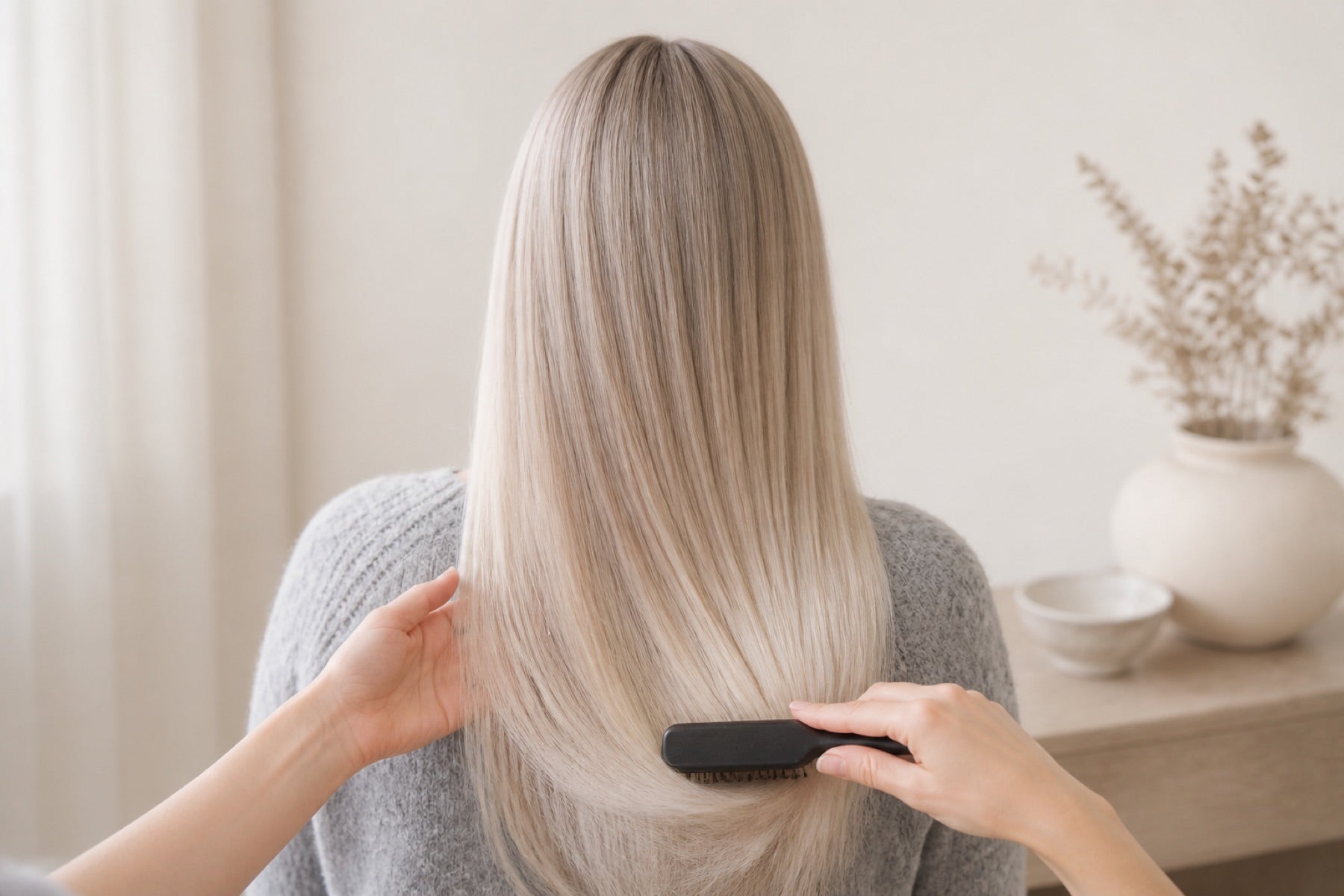
Invisible in the transition. Natural in movement.
An Invisible Finish does not come from a fine weft alone. Color, placement, quantity, top hair and cut all have to work together so that your own hair and the extensions look like one.
Here you can see what matters technically and visually.
IN COMPARISON
The transition makes the difference.
Move the slider and pay particular attention to the contour, the ends, the color gradient and the visual connection to your own hair.

STARTING HAIR
Natural own hair

STESSIA FINISH
Integrated length & volume
TECHNIQUE MEETS AESTHETICS
Four fundamentals for an invisible finish.
The connection can be fine - the result only becomes invisible through the interplay of all the factors.
Flat weft
The fine Genius Butterfly Hole Weft sits close to the head and can be positioned to suit the head shape.
Comfort distance
About 0.5 cm of distance from the scalp helps to reduce pressure and preserve natural movement.
Matching color
The shade picks up the nuances in the lengths and ends, so that no visible dividing line appears.
Balanced quantity
The quantity closes the contour without making the roots unnecessarily heavy or the result compact.
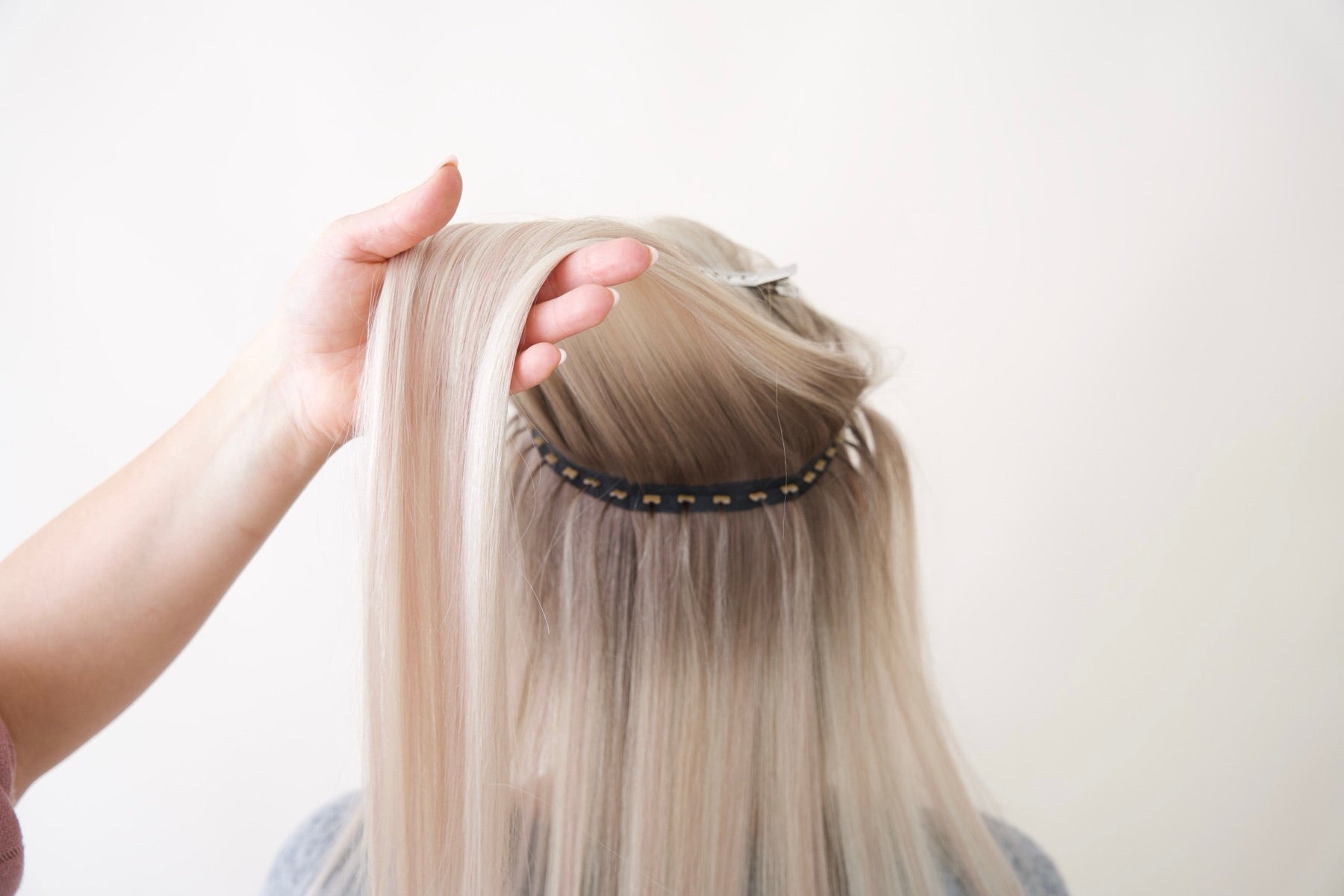
The sandwich principle covers the microrings.
After attachment, the upper part of the weft is folded down. This places the microrings between the two halves of the weft, hidden from the outside.
The row should lie evenly, flat and without folds. Pressure, pulling or single areas standing up are not a clean finish.
Top hair, color and cut tie it all together.
The rows are set so that enough of your own hair lies above them. When you let it down, the top hair should completely cover the roots, the edge and the end points of the weft.
With a clear difference in length, an adapted blending cut makes sure that no hard cut edge remains between your own hair and the extensions.
THREE QUALITY CHECKS
How to check the finished result.
Check not only the look in the mirror, but also the fit, the comfort and the movement.
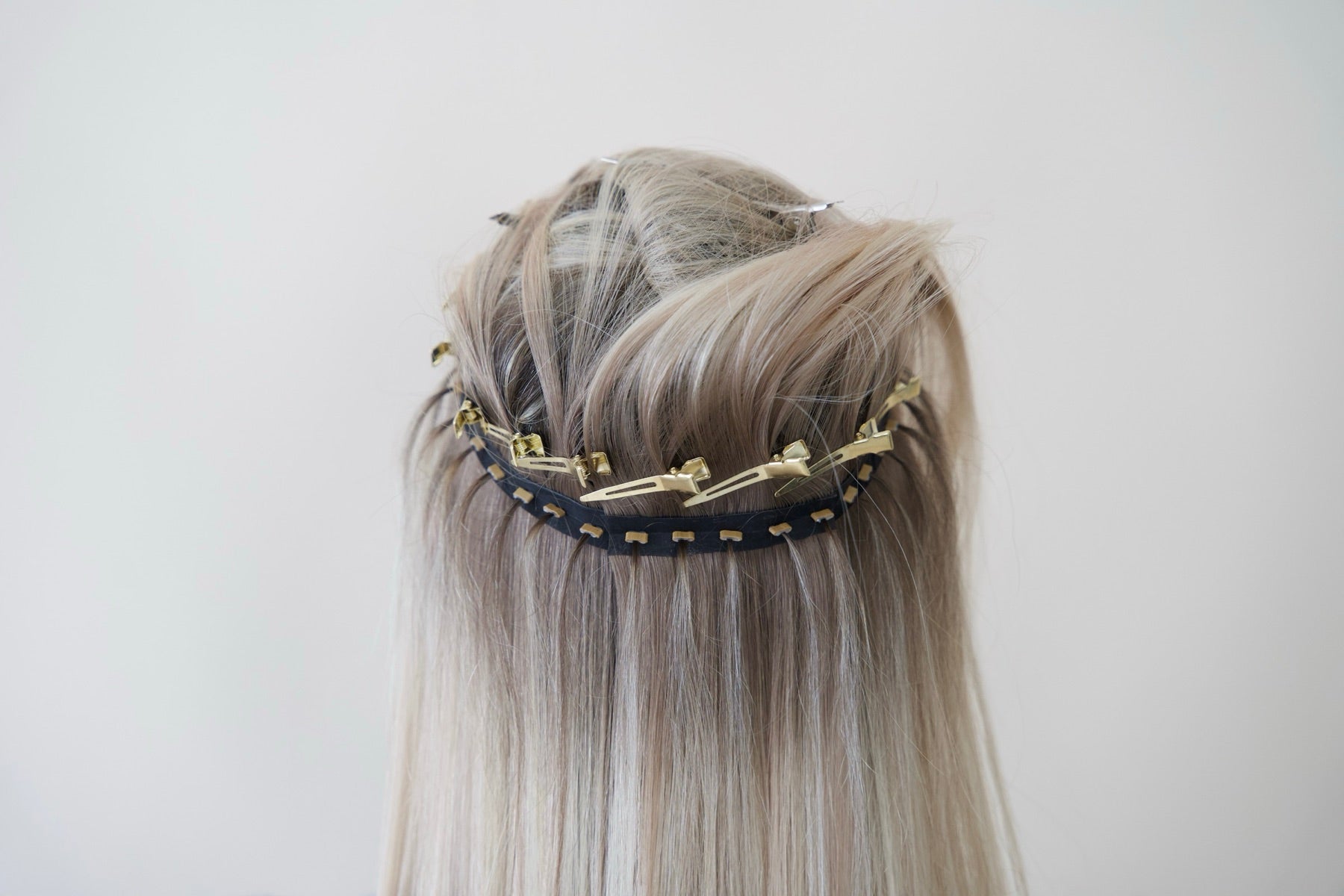
01 · Check the connection
The row lies flat, the microrings are closed and no attachment point creates uncomfortable tension.

02 · Check the contour
Your own hair and the extensions form a continuous line at the ends, with no open cut edge.
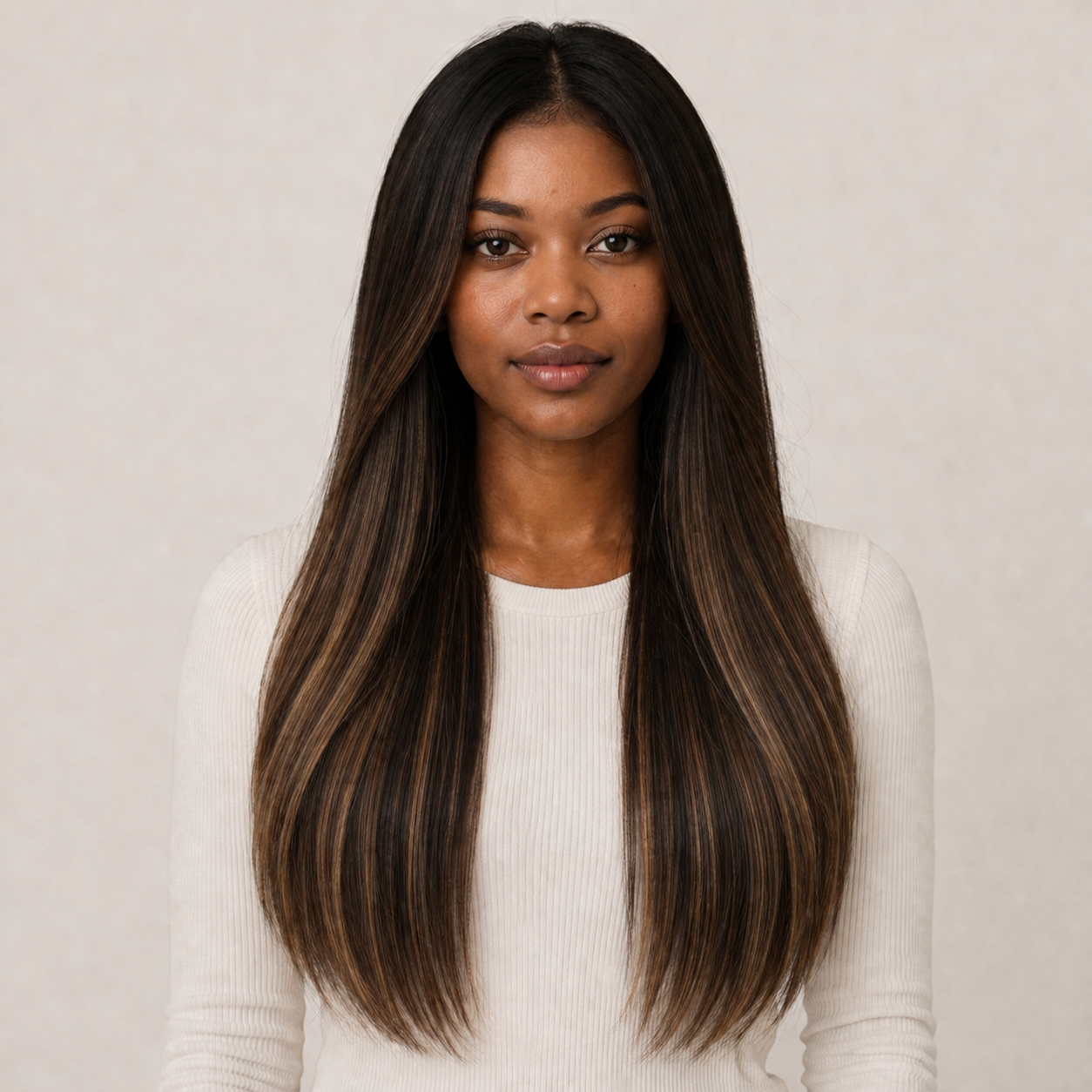
03 · Check the movement
The hair falls softly, moves as one and looks unnecessarily heavy neither at the roots nor through the lengths.
TYPICAL CAUSES
When the transition stays visible.
Work through the cause systematically instead of just styling the top hair over it.
Too high or too close
A missing comfort distance or a row set too high can create pressure and make the connection more easily visible.
Too little top hair
If there is not enough of your own hair above the row, the roots or the end points of the weft can stay visible.
Mismatched color
A differing undertone or too much contrast visually separates your own hair and the extensions.
Wrong quantity
Too little hair leaves the cut edge exposed; too much can make the result unnecessarily compact and heavy.
GOOD TO KNOW
Questions about the Invisible Finish
Can you see the microrings?
The folded-down upper half of the weft and the top hair conceal the attachment. With too little top hair or unsuitable placement, individual points can become visible.
Can I wear a ponytail with an Invisible Finish?
Many hairstyles are possible when the rows are placed correctly. Very high or tight styles can expose the connection, depending on hair volume and position.
Does the weft have to sit directly against the scalp?
No. About 0.5 cm of comfort distance helps to reduce pressure. The connection should sit close to the head, but should not pull uncomfortably or hurt.
What do I do if a hard cut edge stays visible?
First check the quantity used. An adapted blending cut can then connect the contour. If you feel unsure, a professional partner should help.
Does the finish stay invisible after re-fitting?
That is possible if the weft, your own hair and the microrings are in good condition, and the new position is again sectioned cleanly, closed flat and covered by the top hair.
YOUR NEXT STEP
Plan your finish right from the start.
Start with the right color and quantity - or let a Stessia partner guide you through selection and application.